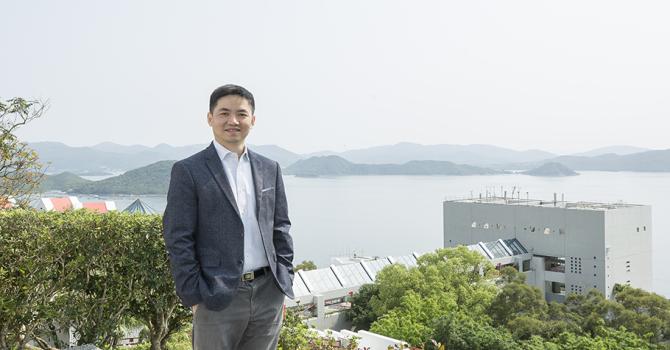
Leading to Perovskite Solar Cells with Higher Efficiency: HKUST Engineering Team Co-Pioneers a "Slow-Release Solvent" Strategy to Advance Large-Area Perovskite Photovoltaic Modules
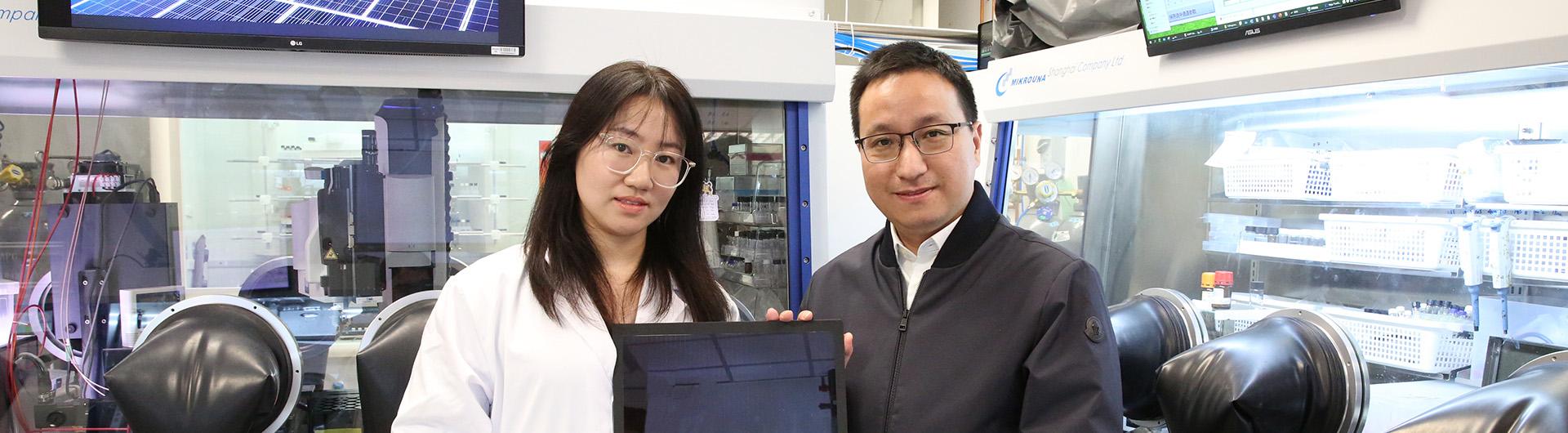
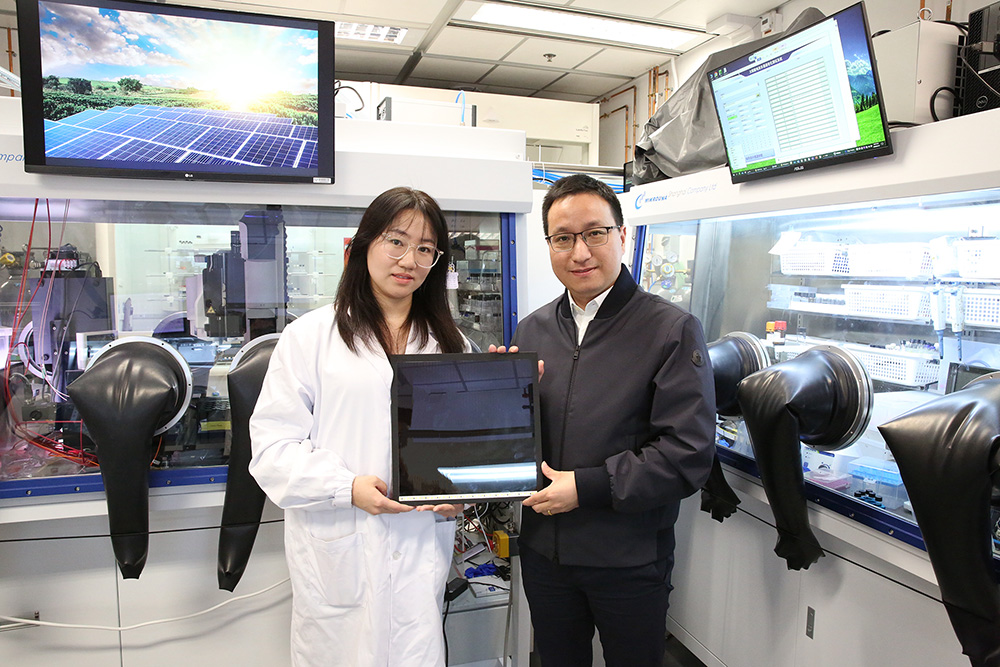
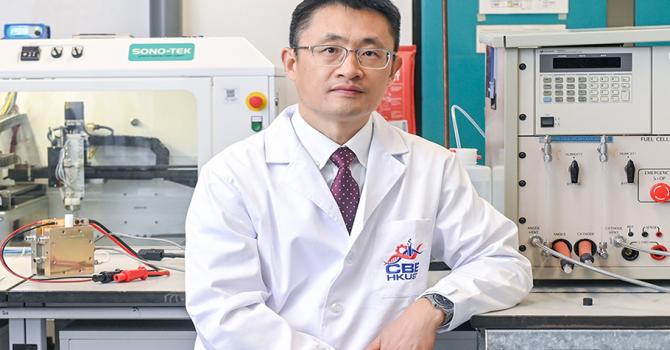
Prof. Yuanyuan ZHOU, Associate Professor in the Department of Chemical and Biological Engineering at HKUST, has led a research team to a significant breakthrough in solar energy technology. Their study, recently featured as the cover story in the prestigious journal Nature Synthesis, introduces a creative way to make "perovskite" solar cells more efficient, stable, and easier to manufacture on a large scale.
The Problem: Deep-Seated Defects
Perovskite solar cells are widely seen as the "next big thing" in clean energy. They are cheaper to make than traditional silicon panels and can be used in everything from power grids to portable gadgets. However, a major hurdle has been "hidden" defects.
During the manufacturing process, solvents evaporate so quickly that they leave behind tiny gaps (voids) and "grooves" at the very bottom of the solar film. Current methods are like applying a "surface dressing"—they fix the top layer but can’t reach the deep structural damage at the base. These hidden flaws cause the cells to lose power and break down over time, especially when made into larger panels.
The Solution: The "Slow-Release" Strategy
To fix this, the team developed a Crystal-Solvate (CSV) seeding strategy. Think of it like a "slow-release" medicine for the solar cell:
- Encapsulation: They "trap" solvent molecules inside tiny rod-like crystals.
- Controlled Growth: Instead of a violent, messy evaporation, the solvent is released slowly and gently during heating.
- Deep Repair: This allows the crystals to grow perfectly from the bottom up, filling in those hidden gaps and creating a smooth, strong foundation.
Record-Breaking Results
The results of this "gentle" crystallization are impressive:
- High Efficiency: The team achieved a power conversion efficiency of 26.13%.
- Size Doesn’t Matter: Usually, solar cells lose a lot of power when they get bigger. This new method maintained an efficiency of 23.15% even when scaled up to nearly 50cm2.
- Durability: The cells showed much better stability under heat and light, a crucial requirement for real-world use.
Expert Insights
"Although perovskite solar cell efficiencies have continued to set new records, the real barrier to commercialization lies in the lack of control over buried interfacial microstructures during upscaling," said Prof. Yuanyuan ZHOU, the lead author. "Our strategy transforms interfacial crystallization from a violent process into a gentle and programmable one."
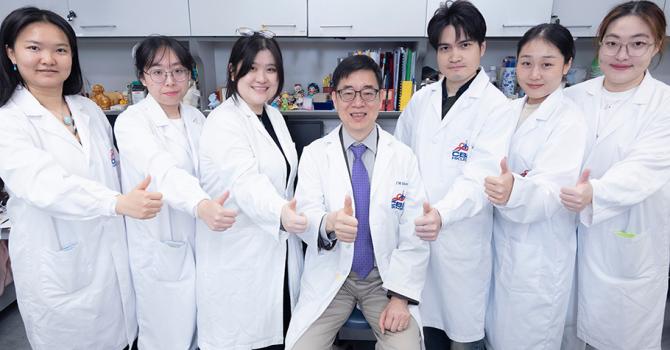
Dr. Mingwei HAO, co-first author of the study and currently Research Assistant Professor in the Department of Chemical and Biological Engineering at HKUST, added: “Perovskites are ‘soft’ materials that are very sensitive to their environment. By introducing this slow-release mechanism, we’ve opened a new pathway for designing better interfaces in these materials.” Dr. Hao, who began this work as a PhD student at HKUST, highlights the department's commitment to nurturing high-impact research from the student level upward.
The research, entitled "Crystal-solvate pre-seeded synthesis for scalable perovskite solar cell fabrication", has been published in the top-tier journal Nature Synthesis. It was featured as the journal’s cover article in April 2026 (Volume 5, Issue 4) and highlighted in a contemporaneous Research Briefing entitled "Scalable crystal-solvate seeding strategy for the fabrication of perovskite photovoltaics", further underscoring its significant academic value in the scalable fabrication of perovskite photovoltaics.
Global Impact
The work was co-led by the HKUST team and Prof. Shuping Pang’s research team from the Qingdao Institute of Bioenergy and Bioprocess Technology, Chinese Academy of Sciences, and other partners. The related technology has also received industrial support from China Merchants Group, a central state-owned enterprise and Fortune Global 500 company, through associated patent development.
(This news was originally published by the HKUST Global Engagement and Communications Office here.)
(This news was originally published by the HKUST School of Engineering here.)
Related Links
- HKUST Team Co-Pioneers a "Slow-Release Solvent" Strategy to Advance Large-Area Perovskite Photovoltaic Modules | The Hong Kong University of Science and Technology
- HKUST Engineering Team Co-Pioneers a "Slow-Release Solvent" Strategy to Advance Large-Area Perovskite Photovoltaic Modules | HKUST School of Engineering
- Crystal-solvate pre-seeded synthesis for scalable perovskite solar cell fabrication | Nature Synthesis
- Scalable crystal-solvate seeding strategy for the fabrication of perovskite photovoltaics | Nature Synthesis