HKUST Partners with Top US and Swiss Universities to Propose Innovative Strategy Reshaping Stability and Sustainability of Perovskite Solar Cells

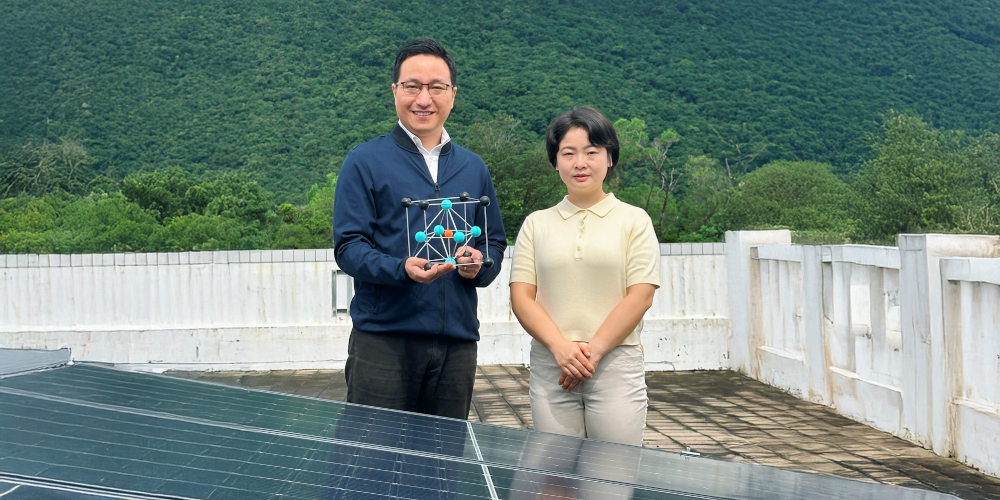
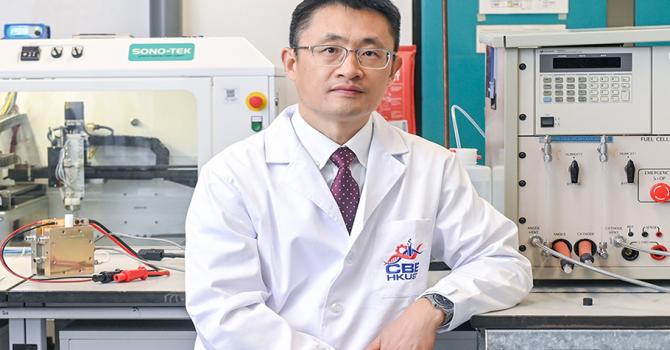
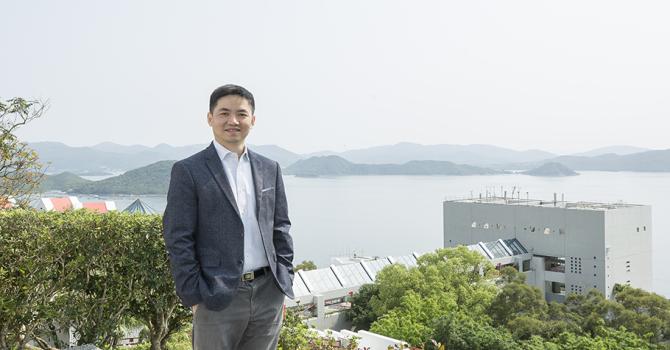
Prof. Yuanyuan ZHOU, Associate Professor in the Department of Chemical and Biological Engineering (CBE) and Associate Director of the Energy Institute at HKUST, along with his research group, has developed innovative bio-inspired multiscale design strategies to improve the long-term operational stability of perovskite solar cells. These strategies draw from natural systems to enhance the efficiency, resilience, and adaptability of solar technologies, addressing key challenges that hinder the commercialization of these solar cells, such as mechanical fragility and environmental susceptibility.
Perovskite solar cells are known for their potential to reduce solar energy costs due to their low-temperature, solution-based manufacturing process. However, issues like poor interfacial adhesion and vulnerability to environmental stressors have limited their commercial viability. To overcome these challenges, Prof. Zhou and his collaborators propose utilizing biological insights, such as the hierarchical functional structures found in leaves, to inspire the design of more robust solar technologies.
Their multiscale strategy involves several levels: enhancing crystallization through bio-inspired molecular interactions, implementing self-healing mechanisms at a microscale, and adopting nature-inspired structures at the device level to improve performance. Recent breakthroughs include the creation of chiral interfaces that mimic biological springs to enhance durability, and laminate-inspired microstructures that improve efficiency and stability.
Dr. Tianwei DUAN, the first author and Research Assistant Professor at HKUST’s CBE Department, stated, “This is not just about new materials; it represents a novel approach to solar technology, inspired by nature itself. By integrating bio-inspired structures, functions, and sustainability, we are excited about the new chapter unfolding in solar energy.”
The research, titled “Bio-Inspired Multiscale Design for Perovskite Solar Cells,” has been published in prestigious journal Nature Reviews Clean Technology, in collaboration with Yale University, École Polytechnique Fédérale de Lausanne, and Lawrence Berkeley National Laboratory.
For more information, please refer to: HKUST Partners with Top US and Swiss Universities to Propose Innovative Strategy Reshaping Stability and Sustainability of Perovskite Solar Cells | HKUST School of Engineering