HKUST Engineering Develops Novel Calcium-Ion Battery Technology Enhancing Energy Storage Efficiency and Sustainability
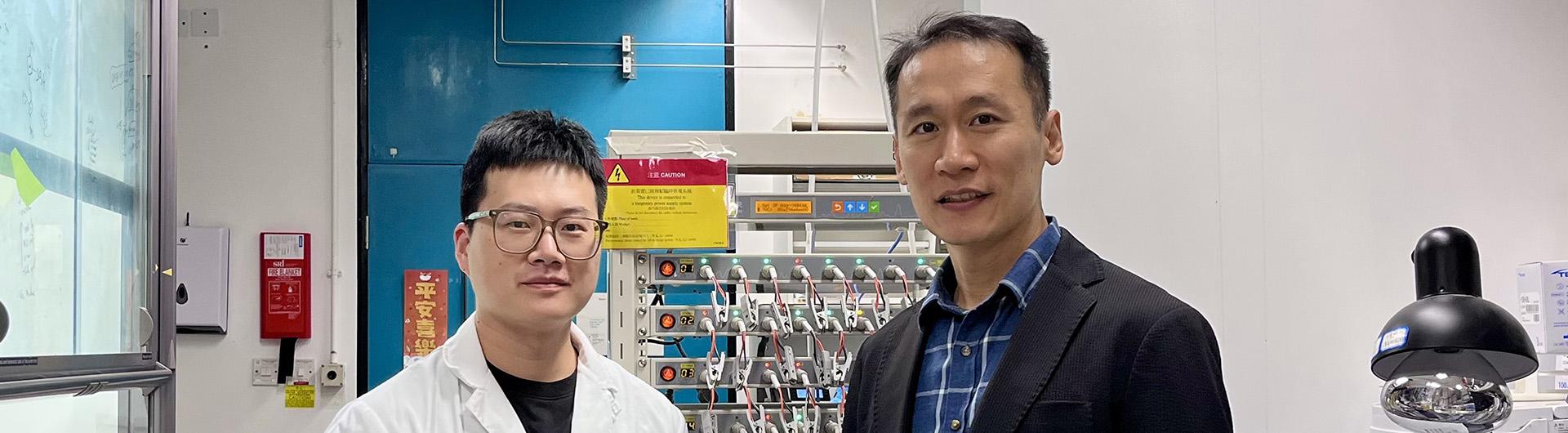
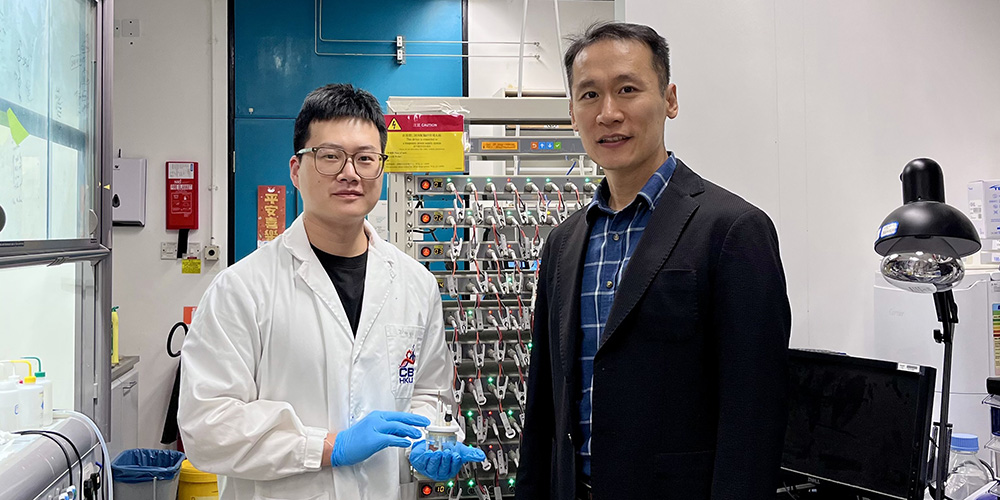
A research team led by Prof. Yoonseob KIM, Associate Professor of the Department of Chemical and Biological Engineering, has made an exciting advancement in calcium-ion battery (CIB) technology at The Hong Kong University of Science and Technology (HKUST). This breakthrough could change how we store energy in our everyday lives. By using new materials called quasi-solid-state electrolytes (QSSEs), these CIBs could improve the efficiency and sustainability of energy storage, benefiting everything from renewable energy systems to electric vehicles. The research is detailed in the journal Advanced Science titled “High-Performance Quasi-Solid-State Calcium-Ion Batteries from Redox-Active Covalent Organic Framework Electrolytes”.
As the world moves towards greener energy, the need for effective and stable battery systems is more important than ever. Current lithium-ion batteries (LIBs) face issues like limited resources and energy capacity, making it essential to explore alternatives like CIBs for a sustainable future.
CIBs are promising because they have similar energy capabilities to LIBs and are made from materials that are abundant on Earth. However, they face challenges in moving ions efficiently and maintaining performance over time, which makes them less competitive than LIBs.
To tackle these issues, Prof. Kim's team developed new materials called redox covalent organic frameworks to act as QSSEs. These materials showed impressive ability to conduct ions and transport calcium ions at room temperature. Their research combined experiments and simulations, revealing that calcium ions move quickly along specific pathways within these new materials.
This innovative work led to the creation of a complete calcium-ion battery that demonstrated a strong energy capacity and maintained performance even after many charging cycles. Prof. Kim stated, “Our research shows the potential of calcium-ion batteries as a sustainable alternative to lithium-ion technology. By using the special properties of redox covalent organic frameworks, we are making significant progress towards high-performance energy storage solutions for a greener future.”
This study was a collaboration between researchers at HKUST and Shanghai Jiao Tong University.
(This news was originally published by the HKUST School of Engineering here.)