HKUST Engineering Develops MXene Membrane as Multifunctional Interface for Solar Driven Freshwater and Hydrogen Production
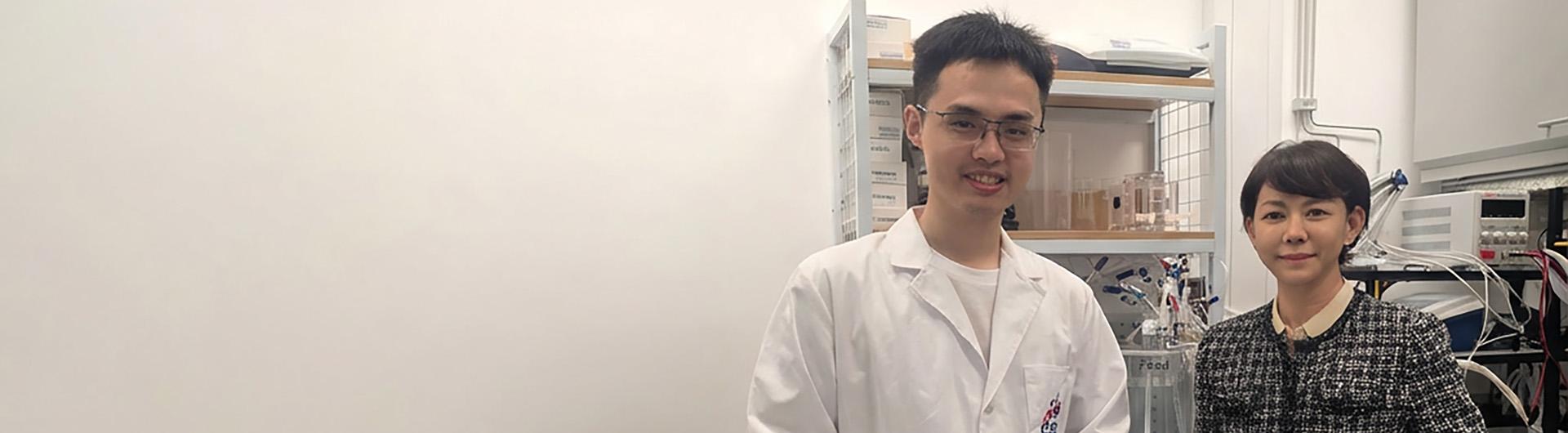
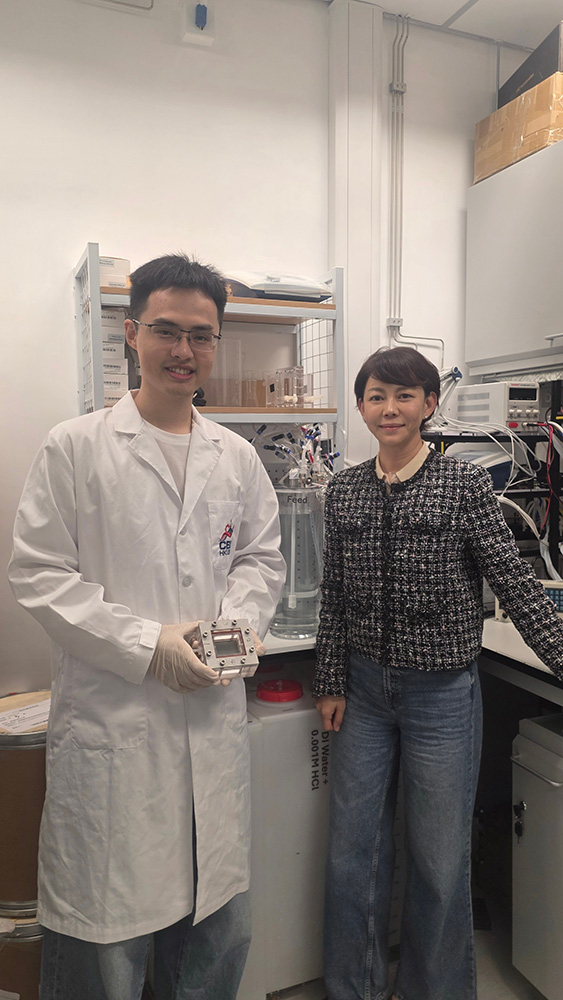
A research team led by Prof. Alicia AN and Dr. Jiawei SUN of the Department of Chemical and Biological Engineering (CBE) at The Hong Kong University of Science and Technology (HKUST), together with collaborators, has developed a multifunctional MXene based membrane that enables the simultaneous production of freshwater and clean hydrogen fuel using solar energy. The research, titled “MXene Membrane as Multifunctional Interface for Vapor Splitting in Photothermal–Catalytic Membrane Distillation”, has been published in Advanced Materials, a flagship journal in materials science.
The study introduces a specially designed photothermal–catalytic sweeping gas membrane distillation (PTC SGMD) system, which combines solar evaporation and photocatalytic vapor splitting in one platform. This integrated design tackles long standing challenges in conventional desalination and hydrogen production, such as energy loss, inefficient mass transfer, and photocatalyst instability. By creating a liquid–solid–gas interface, vapor is generated on the feed side and split into hydrogen and oxygen on the permeate side, enabling efficient dual output.
The MXene membrane serves multiple roles simultaneously: acting as a solar absorber, a heat transfer medium, and an evaporation interface. This multifunctionality simplifies device architecture while improving overall efficiency. The system demonstrated sustained operation and scalability potential, underscoring its promise for deployment in regions most affected by drought and climate change.
The work contributes to CBE’s ongoing efforts in sustainable materials, energy–water nexus research, and climate relevant technologies, reinforcing HKUST’s commitment to addressing global sustainability challenges through interdisciplinary innovation.
For more information, please refer to the original publication in Advanced Materials here.