Future of Energy Storage: HKUST Engineering Develops Novel Cartilage-Inspired Polymer Nanocoating to Substantially Extend Battery Lifespan
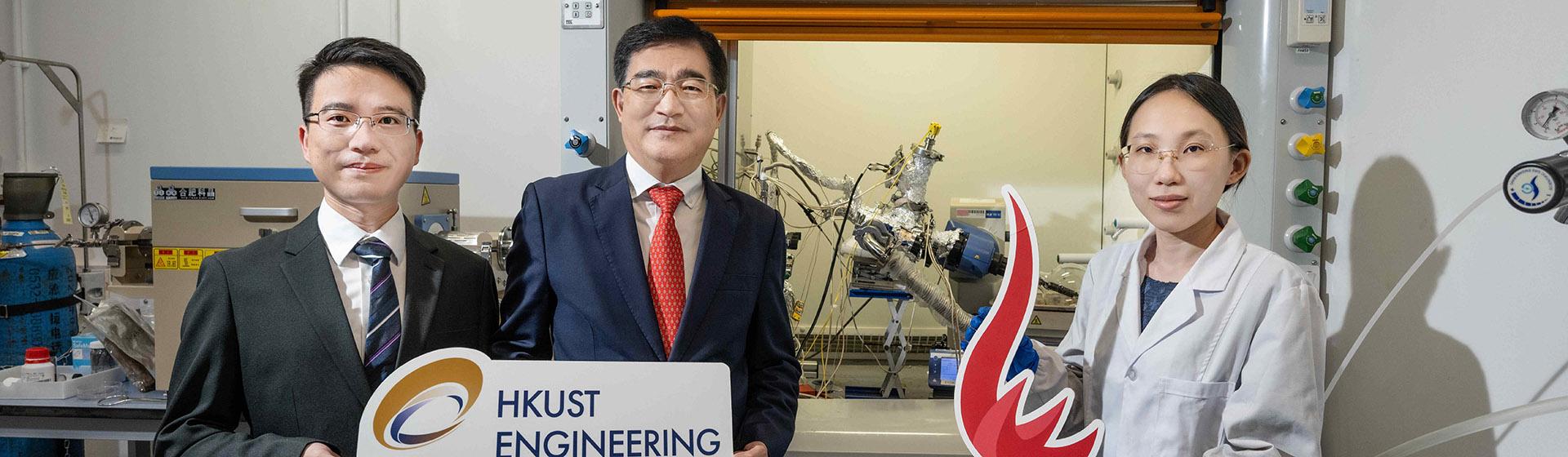
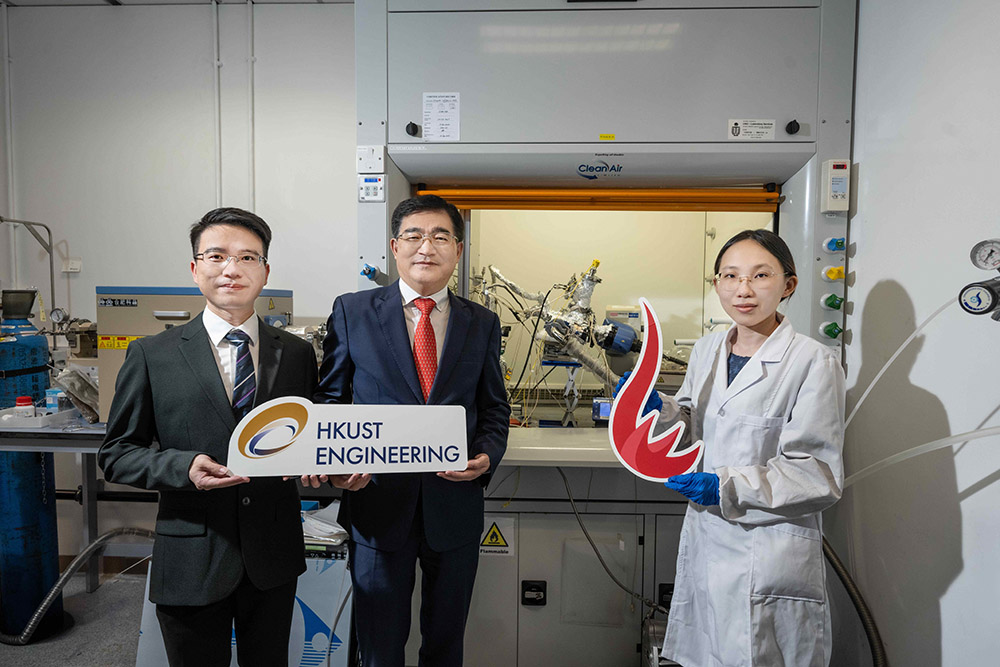
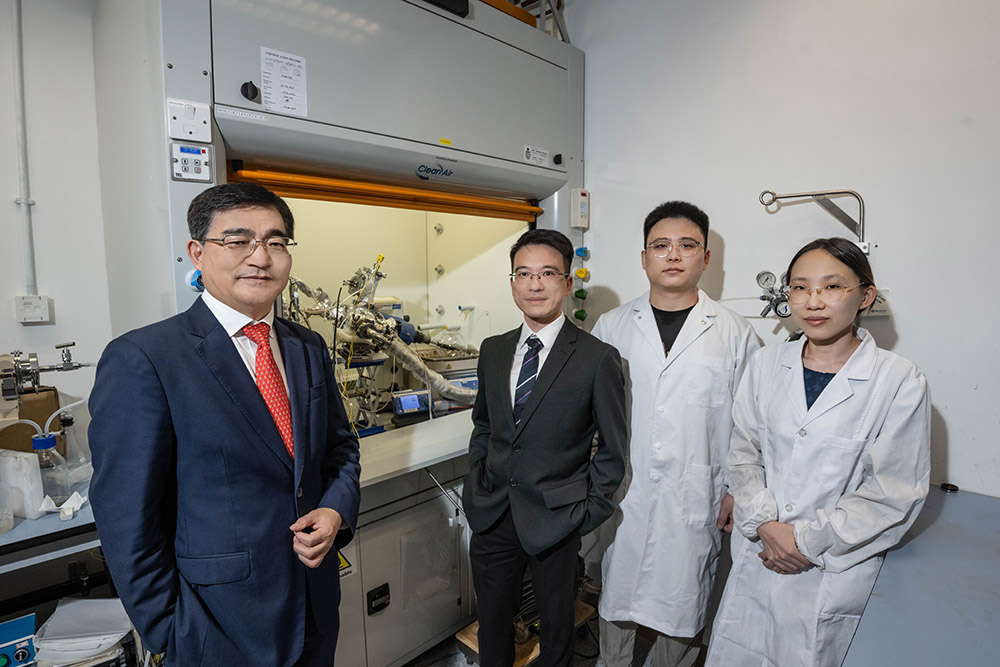
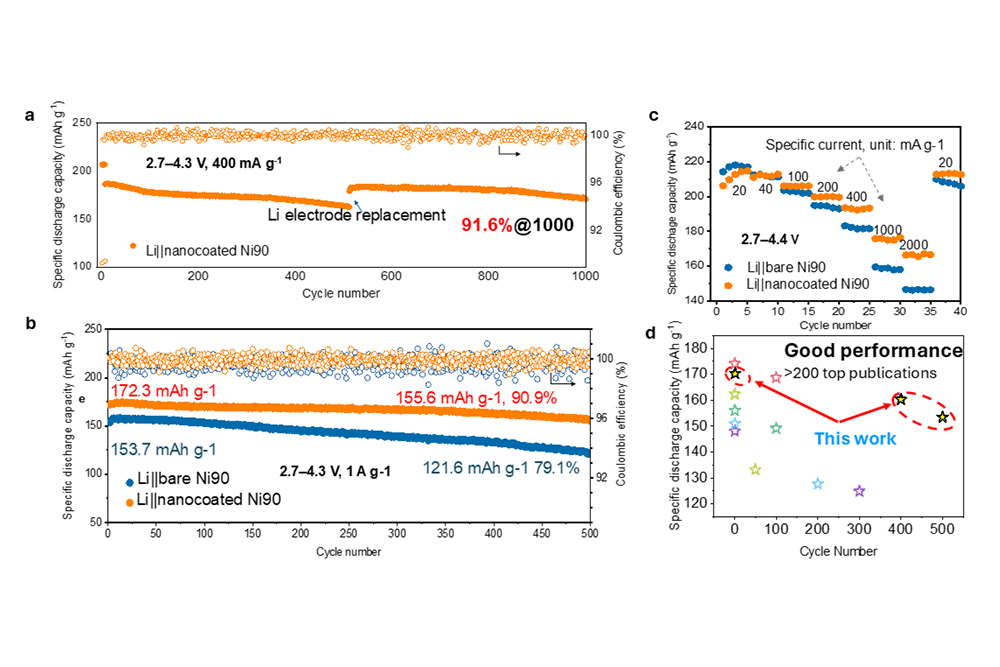
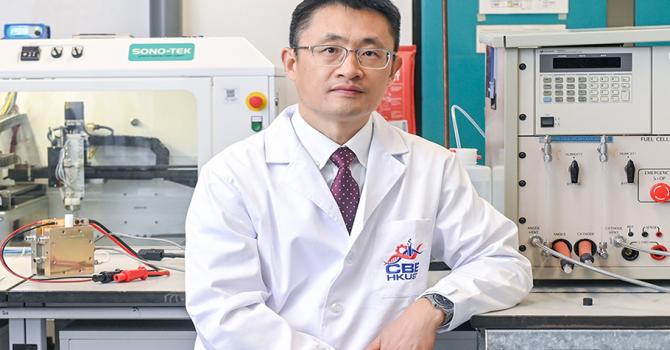
Prof. Guohua CHEN, Chair Professor of the Department of Chemical and Biological Engineering (CBE) at HKUST, has led a research team in developing a biomimetic nanocoating that could significantly extend the lifespan of batteries used in smartphones, electric vehicles (EVs), and other electronic devices. Inspired by the stress-buffering function of human cartilage, the team developed an innovative cartilage-inspired polymer nanocoating that effectively suppresses the degradation and wear of battery cathode materials at the source. This new technology not only enables batteries to retain exceptionally high capacity after thousands of charge-discharge cycles but also opens a promising new pathway toward the industrial deployment of next-generation nickel-rich lithium-ion batteries.
This research includes the contributions of Dr. Qiang LIU, a HKUST PhD graduate and Research Assistant Professor in CBE at HKUST, and Dr. Yutong LIU, a postdoctoral fellow in CBE at HKUST who conducted part of the research during her PhD study at the Hong Kong Polytechnic University. This research was recently published in the prestigious journal Nature Nanotechnology, under the title “Dynamic delocalization of stress in brittle battery positive electrode active materials by shape-memory polymer nanocoating”.
Human cartilage inspiration brings new approach to high-energy batteries
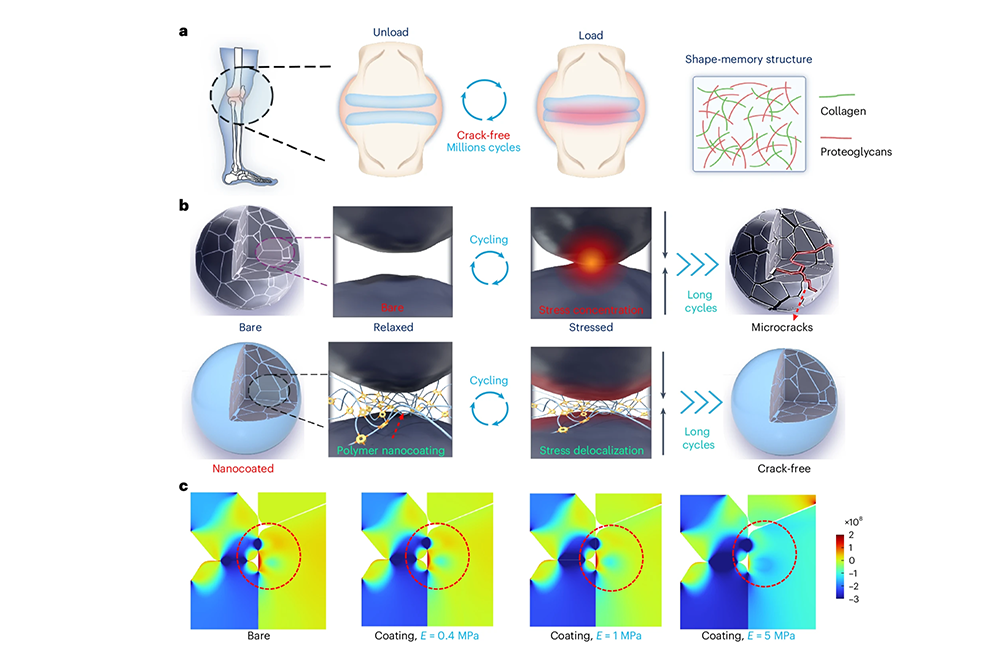
Lithium-ion batteries are widely used in smartphones, electric vehicles, and consumer electronics. As global demand for high-energy batteries continues to grow, nickel-rich layered cathodes have emerged as a key focus for future battery development. However, their commercialization is hindered by a problem known as “intergranular cracking”. During the charging and discharging process, lithium ions moving in and out of the cathode cause constant volume changes. Over time, this creates severe dynamic internal stress, leading to cracks and degradations of the active battery particles, which reduces battery capacity and shortens service life.
To overcome this challenge, the research team drew inspiration from human joints. In the human body, cartilage can deform and dissipate external stress, protecting brittle bones from damage. Replicating this biological masterpiece at the nanoscale, the researchers designed a crosslinked shape-memory polymer coating, p(BA-V4D4). Using an advanced gas-phase technique called initiated Chemical Vapor Deposition (iCVD), the team deposited an ultra-thin (~14 nm), highly uniform polymer layer on the surface of primary particles. The monomer vapor deeply penetrates into the electrode secondary particles, coating the vulnerable internal boundaries between primary particles and polymerized in-situ to form a resilient stress-absorbing layer similar to cartilage in human joints to maintain dynamic stability during prolonged battery cycling.
Dr. Qiang LIU, a co-corresponding author of the study, said, “By deploying a shape-memory polymer as an adaptive stress dissipator, we can suppress intergranular cracking via a solid stress delocalization mechanism. We engineered the polymer structure to achieve an optimal balance between deformability and strength. To seamlessly integrate this nanocoating into the grain boundaries via incredibly narrow nanosized channels, measuring just 10 to 20 nanometers wide and 4,000 nanometers deep, we made use of the CVD technology developed earlier in our laboratory. The optimized co-polymer behaves like cartilage between adjacent particles.”
Dr. Yutong LIU, a co-first author of the study, said, “Traditional methods cannot penetrate the grain boundaries of cathode materials or allow researchers to tune the mechanical properties of polymers easily. Our iCVD method seamlessly transports reactants into these boundaries to form a protective coating via in-situ polymerization. We have successfully applied this technology to nickel-rich NCM and commercial LiFePO4 materials, demonstrating its universal applicability.”
Advancing solid-state batteries and future industrial applications
Reflecting on the milestones, Prof. Guohua CHEN, also a co-corresponding author of the study, added, “The idea of applying CVD polymer coatings for energy storage materials was initiated during my sabbatical at MIT in 2005, where CVD polymers were successfully applied to pharmaceutical particles for controlled drug release. We are proud to be the first to successfully apply this technology to lithium-ion battery materials. We have demonstrated that CVD can coat conductive polymers (as reported in our research published in Nature Energy in 2019) and a broader range of functional polymeric materials, such as this p(BA-V4D4).”
Looking ahead, Prof. Chen said that the team is exploring the application of the technology to solid-state batteries, where it could help to address critical challenges related to both high-energy density and safety. The research team is also scaling up the process to produce coated particles at 1,000 kg scale for making large batteries for industrial applications in consumer electronics, electric vehicles, and electric vertical takeoff and landing (eVTOL) aircraft.
This research is a collaborative effort with experts from local universities and other institutions across Hong Kong and Chinese Mainland on materials synthesis, characterization, and data science. The multidisciplinary research team includes co-first authors Dr. Yutong LIU (PolyU/HKUST), Prof. Wenhua ZUO (Xiamen University), and Dr. Wei WANG (PhD graduate, PolyU). Key contributors include Dr. Hailong YU and Prof. Xuejie HUANG (Institute of Physics, Chinese Academy of Sciences), Prof. Xiang LIU (Beihang University), Prof. Haihui RUAN and Dr. Cong LIN (PolyU), Dr. Kai ZHANG (Institute of High Energy Physics, Chinese Academy of Sciences), Prof. Ke DU (Central South University), and Prof. Feng PAN (Peking University Shenzhen Graduate School).
(This news was originally published by the HKUST Global Engagement and Communications Office here and the HKUST School of Engineering here.)
Related Links
- HKUST Develops Novel Cartilage-Inspired Polymer Nanocoating to Substantially Extend Battery Lifespan | HKUST
- HKUST Engineering Develops Novel Cartilage-Inspired Polymer Nanocoating to Substantially Extend Battery Lifespan | HKUST School of Engineering
- Dynamic delocalization of stress in brittle battery positive electrode active materials by shape-memory polymer nanocoating | Nature Nanotechnology
- Building ultraconformal protective layers on both secondary and primary particles of layered lithium transition metal oxide cathodes | Nature Energy