HKUST Develops World's First AI Slide-Free Pathology Imaging System
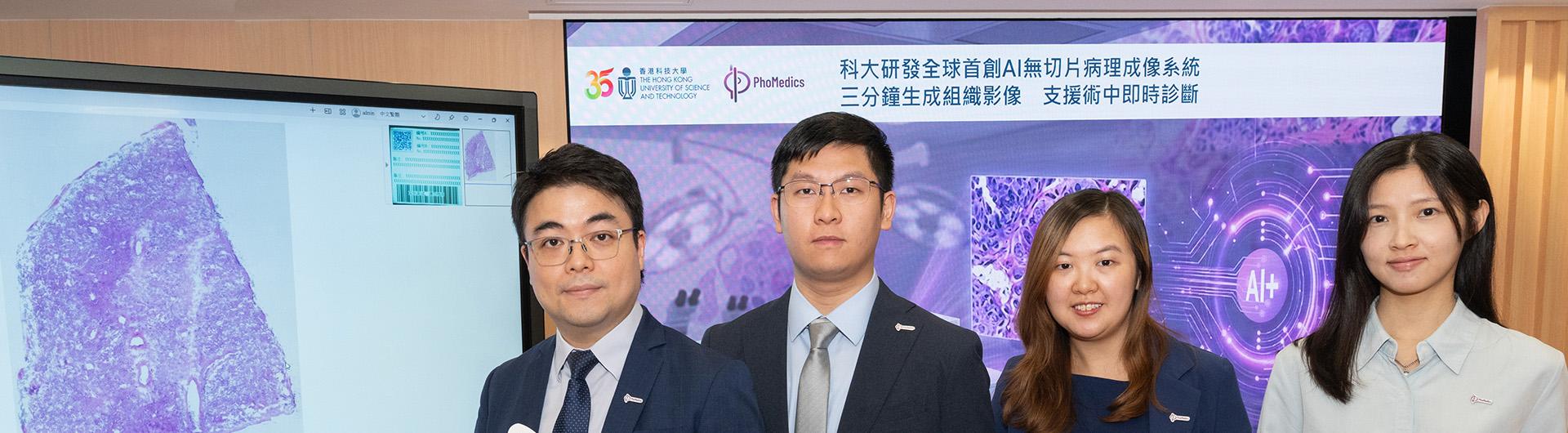
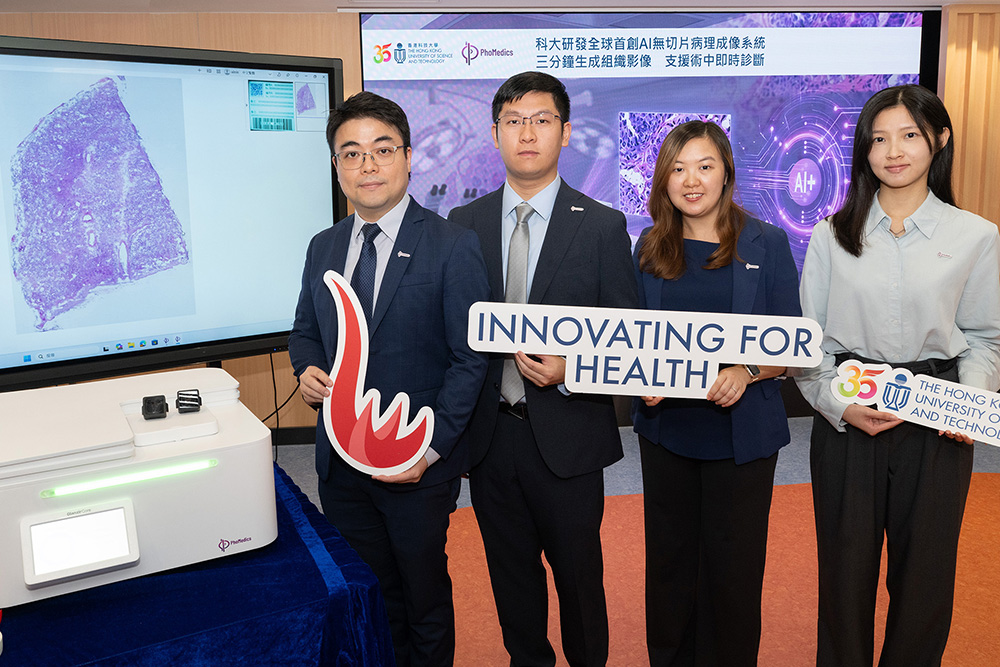
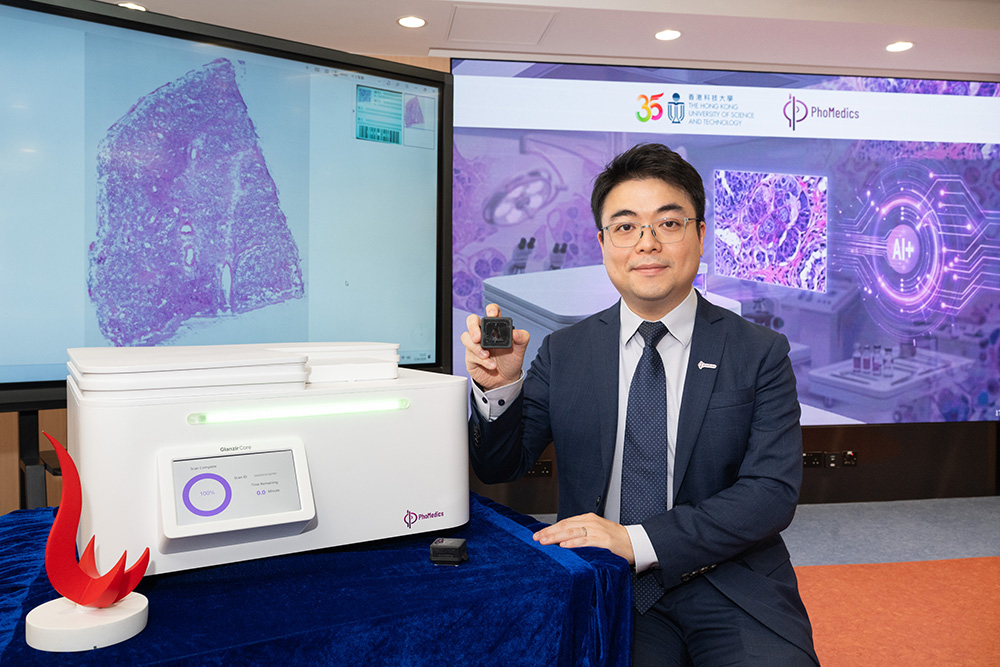
Prof. Terence WONG, Associate Head and Associate Professor in the Department of Chemical and Biological Engineering at HKUST, together with his medtech startup PhoMedics Limited, has developed a groundbreaking medical imaging system called Glanzir®. It is the world's first artificial intelligence (AI)-powered system that can look inside tissue samples during surgery without having to cut them into thin slices or stain them with chemicals.
Currently, when doctors remove a tumor, they must wait for a laboratory to process the tissue to ensure no cancer cells are left behind. This standard process can take days, or if done quickly during surgery using a freezing method, about 30 to 45 minutes with less accurate results.
Glanzir® solves this problem by using special lights to highlight natural structures in fresh tissue and using AI to generate highly accurate, colored medical images in just three minutes directly inside the operating room.
Why This Matters for Patients and Healthcare
|
Benefit |
How It Works |
|
Fewer Repeat Surgeries |
Currently, about 10% to 20% of cancer patients require a second surgery because remaining cancer cells are discovered after the initial operation. By giving surgeons highly accurate results in three minutes, this technology helps them ensure the entire tumor is removed the first time. |
|
Remarkable Accuracy |
The system currently achieves an 85% or higher agreement rate with traditional, week-long lab tests. Following upcoming large-scale clinical trials, the research team expects this accuracy to rise to around 95%. |
|
Preserves Tissue Samples |
Because the system does not cut, freeze, or damage the tissue, the exact same sample remains fully intact and available for doctors to run advanced, detailed molecular and genetic tests later. |
|
Compact and Easy to Use |
The device is about the size of a microwave and weighs 30 kg, making it easy to fit into operating rooms. It features a simple, one-click start that automates the scanning process so medical staff can use it with ease. |
Next Steps toward Everyday Use
The underlying technology was supported by the Hong Kong government's prestigious Research, Academic and Industry Sectors One-plus (RAISe+) Scheme.
To teach and test the AI, the team has already collected and analyzed over 2,000 breast and lung cancer patient samples in collaboration with major healthcare institutions, including Queen Mary Hospital, Prince of Wales Hospital, Hong Kong Sanatorium & Hospital, and leading hospitals in the Chinese Mainland. The team will begin large-scale clinical trials within the next three months to bring this life-saving technology closer to everyday clinical use in hospitals.
(This news was originally published by the HKUST Global Engagement and Communications Office here.)