Enhancing Energy Density and Extending Cycle Life: HKUST Engineering Develops Dynamic Integrated Interface Engineering for Lithium Metal Batteries

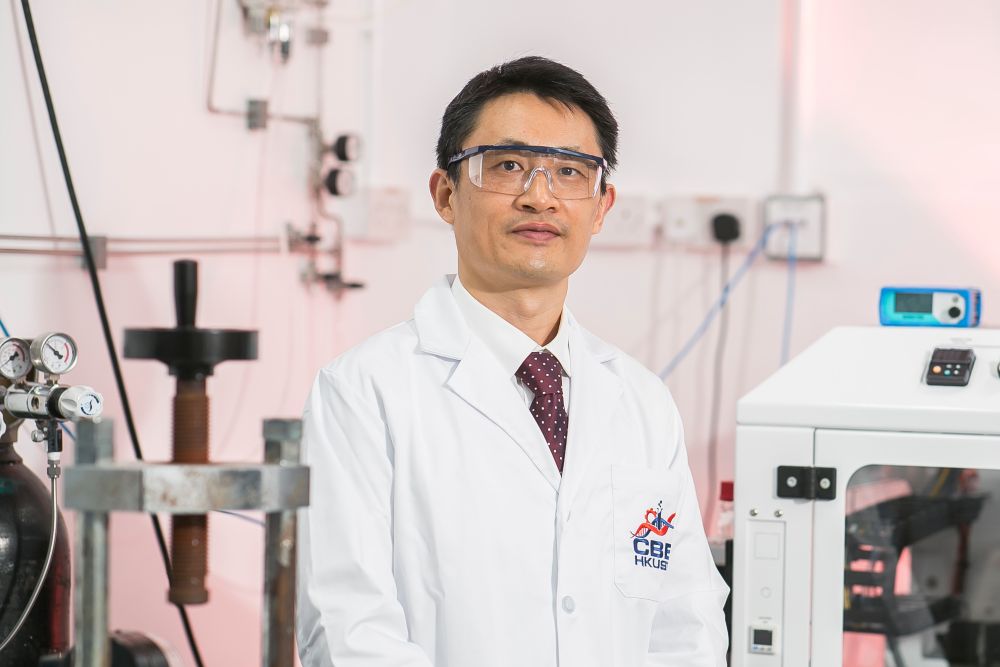
Prof. Minhua SHAO, Cheong Ying Chan Professor of Energy Engineering and Environment and Head and Chair Professor of the Department of Chemical and Biological Engineering (CBE) at HKUST, has led a research team to create a smarter, safer way to build next-generation batteries. Their new design could lead to smartphones, laptops, and electric vehicles that are incredibly light and last much longer on a single charge.
The team's newly designed battery achieved two major milestones:
- More Power, Less Weight: It matches the energy capacity of today's best commercial batteries but in a much lighter package.
- Longer Lifespan: A test version of the battery kept 90% of its original capacity even after 200 charges.
The Problem: Why Next-Gen Batteries Wear Out Fast
To make batteries lighter and pack in more energy, scientists want to use "anode-free" lithium metal batteries.
Imagine a traditional battery as having a built-in metal reservoir (the anode) to store power. An "anode-free" battery removes this heavy reservoir entirely, saving massive amounts of space and weight. Instead, the battery stores its energy directly on a simple sheet of copper.
However, this design has had a major flaw: lithium does not spread out evenly on copper. As the battery charges, the lithium clumps up and forms sharp, needle-like structures called dendrites. These needles can tear through the inside of the battery, causing it to lose power quickly or even short-circuit and catch fire.
The Solution: A Self-Assembling Protective Gel
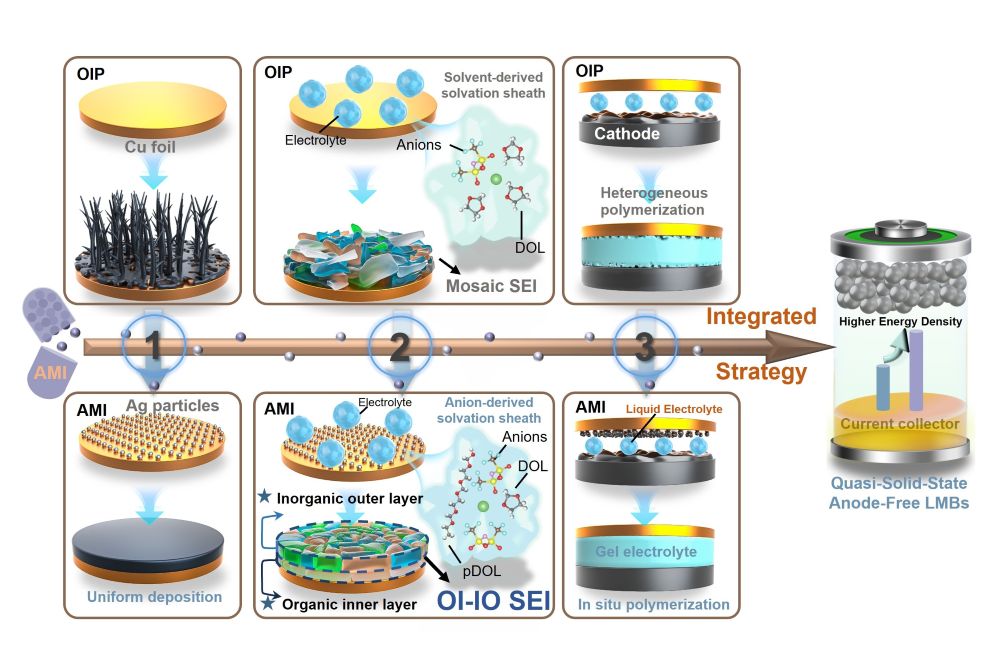
To solve this, Prof. Shao's team developed a special chemical recipe called an AMI additive (made of silver and other protective elements). When added to the battery, it automatically triggers a three-step chain reaction to fix the internal surfaces:
- Prepares the Surface: It coats the copper sheet with a microscopic layer of silver, making it perfectly smooth so lithium can spread out evenly without forming dangerous needles.
- Builds a Shield: It automatically constructs a dual-layered protective wall (called an SEI) over the metal.
- Turns into Gel: It transforms the battery's liquid core into a firm, protective gel that keeps everything locked securely in place.
This entire protective shield builds itself automatically inside the battery after it is assembled, ensuring fast energy flow and keeping the battery stable and safe.
The Research Team
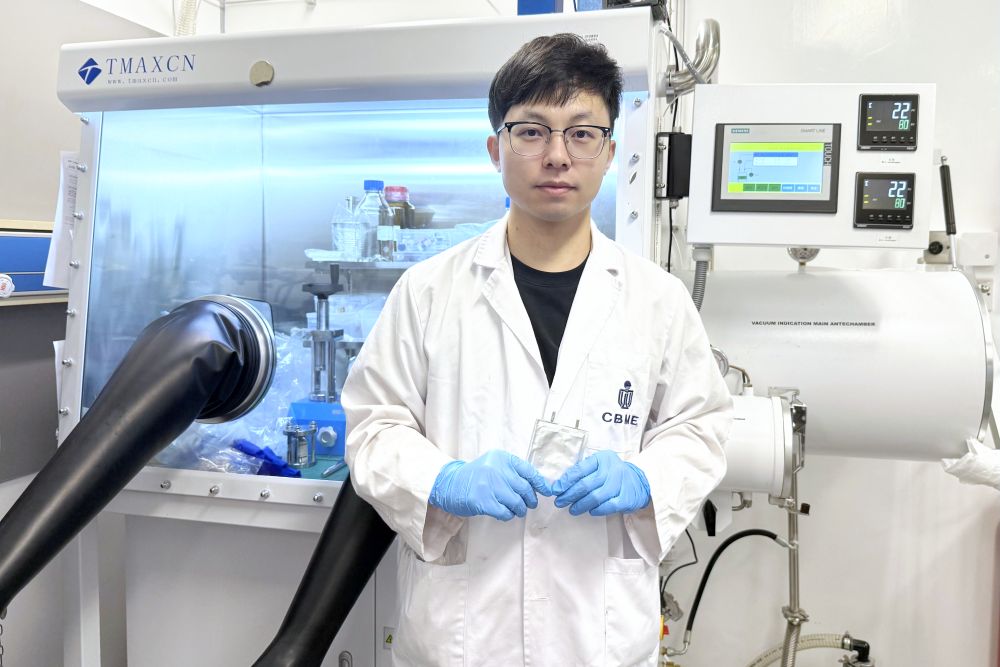
This research was recently published in Nature Communications under the title “Highly stable quasi-solid-state initially-anode-free lithium metal batteries enabled by dynamic integrated interface engineering”. Alongside Prof. Shao, the breakthrough was achieved by a talented team of researchers from his lab at HKUST's CBE Department:
- Dr. CHEN Yunyi (Lead author and Postdoctoral Fellow)
- Dr. LU Siqi (Postdoctoral Fellow)
- Dr. QIAN Xitang (Former Postdoctoral Fellow)
- Dr. LYU Yuxiang (Recent PhD Graduate)
- QIU Yican, ZHOU Siyu, and LAN Xinyi (Current PhD Students)
Key Insight from Prof. Shao:
"The key is not simply adding a silver salt or a polymerization initiator. Our AMI releases multiple functions through a controlled process after cell assembly, allowing us to modify the current collector, build an anion-derived solvation structure, and form a robust organic-inner/inorganic-outer SEI in one integrated process. This makes lithium plating and stripping highly reversible in an anode-free, quasi-solid-state configuration, laying a stronger foundation for the development of next-generation batteries."
(This news was originally published by the HKUST Global Engagement and Communications Office here and the HKUST School of Engineering here.)
Related Links
- HKUST Develops Dynamic Integrated Interface Engineering for Lithium Metal Batteries | HKUST
- HKUST Engineering Develops Dynamic Integrated Interface Engineering for Lithium Metal Batteries | HKUST School of Engineering
- Highly stable quasi-solid-state initially anode-free lithium metal batteries enabled by dynamic integrated interface engineering | Nature Communications