Offering a More Convenient Solution for Future Infectious Disease Surveillance and Genetic Screening: HKUST Engineering Develops “One-Pot” 30-Minute High-Sensitivity At-Home Testing

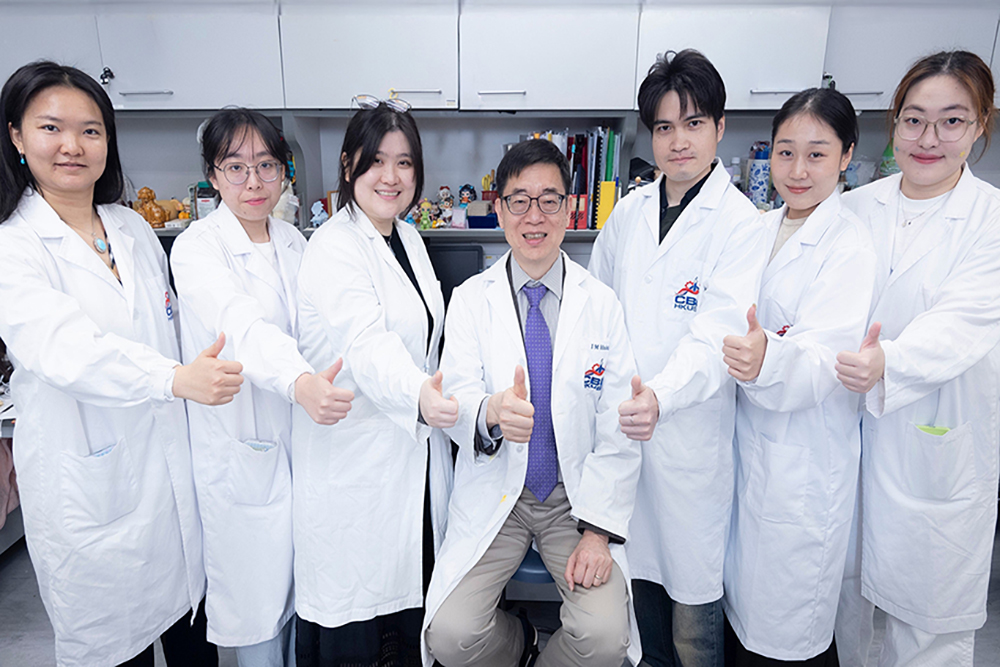
Prof. I-Ming HSING, Professor of the Department of Chemical and Biological Engineering from HKUST, has led a joint research team with researchers from The Chinese University of Hong Kong (CUHK) to develop "TEMPO," an innovative "one-pot" testing platform that can turn highly sensitive laboratory-grade genetic testing into a simple, single-step test performed at home. The study, titled “Thermodynamically programmed one-pot CRISPR platform for point-of-care SNP genotyping”, was published in the international journal Nature Communications.
The Breakthrough: Lab-Quality Results at Home
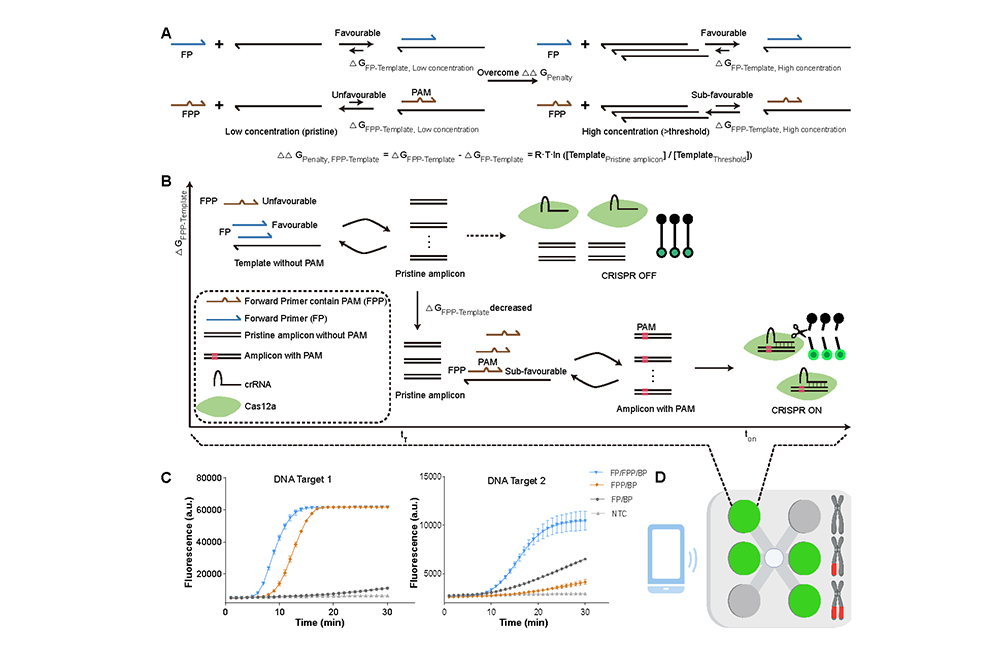
Traditionally, highly sensitive nucleic acid (genetic) tests require complex, multi-step procedures and specialized laboratory equipment. The research team solved this by using the laws of physics and chemistry (thermodynamics) to design a test where all reactions happen automatically in the correct order inside one single tube.
- Fast & Simple: Users can get highly accurate results—matching the performance of professional lab tests—in as little as 30 minutes using a single reaction tube.
- No Special Storage: The test uses stable materials that do not require refrigeration (cold chain storage) or bulky instruments, making it ideal for homes, airports, clinics, and remote areas.
The "One-Pot" Cooking Analogy
Think of conventional testing as cooking a complex dish where ingredients must be added at precise times. Previously, this required manual steps or complex setups.
TEMPO solves this using a smart pair of DNA starters (primers):
- The First Starter: Immediately begins copying and multiplying the target virus's genetic material.
- The Second Starter: Remains quiet and "waits" until enough genetic material has built up. Once a specific threshold is crossed, it automatically switches on and triggers a rapid, easy-to-read signal.
Key Benefits & Future Impact
- Ultra-Sensitive: The test can detect incredibly tiny amounts of a virus and can even spot differences of just a single letter in a DNA sequence.
- Versatile Applications: It has already successfully detected COVID-19, Flu, and HIV, and can accurately screen for genetic traits (like the East Asian "alcohol flush" reaction) and hereditary conditions.
- What's Next: The team plans to develop an all-in-one, "sample-to-answer" home testing device within the next year, aiming to provide a tool that is as easy to use as a rapid antigen test (RAT) but with the superior accuracy of a laboratory PCR test.
(This news was originally published by the HKUST School of Engineering here.)
Related Links